
Read the system, not just the map.
Start with current reporting. Then learn what a map point, contract, count, or estimate can actually prove.
See what is happening now.
Start with a concise RouteFrame source brief, then choose whether to open the complete publisher report. RouteFrame stores links, reviewed summaries, and metadata, not copied articles.
 Axios
AxiosBehind Austin's Flock blowback
Central Texas
POLICY DISPUTE REPORTEDREAD ROUTEFRAME SUMMARY Axios
AxiosMetro Detroit pushes back on license plate readers
Metro Detroit, Michigan
POLICY DISPUTE REPORTEDREAD ROUTEFRAME SUMMARY Axios
AxiosHow Triangle cities differ on license plate reader cameras
Triangle, North Carolina
POLICY DISPUTE REPORTEDREAD ROUTEFRAME SUMMARYWatch the reporting. Check the sources.
Recent means publication date, not verified truth or a social-engagement ranking. RouteFrame links to original publishers and labels creator, newsroom, and technical perspectives separately.
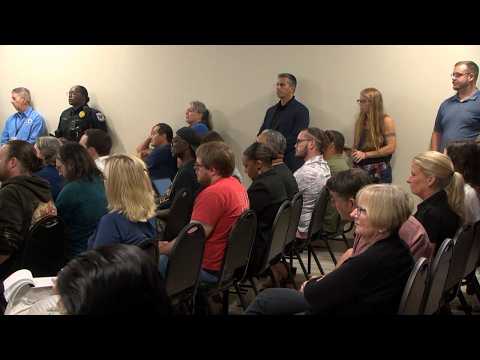 2:20
2:20Cobb County residents pack town hall regarding Flock cameras
Atlanta News First reports residents and police debated Cobb County's Flock use at a public town hall. Police said audits would move to monthly checks plus an annual audit; RouteFrame has not independently verified an adopted written policy.
Atlanta News First / AUG 28, 2026 / 2:20WATCH ORIGINAL VIDEO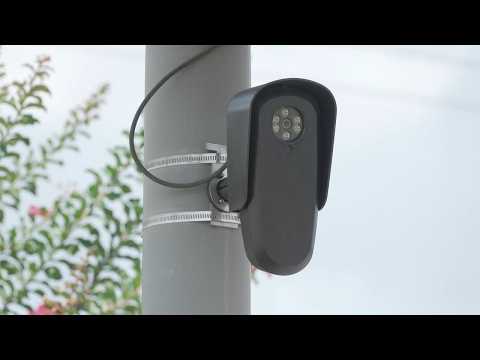 2:01
2:01Task force meets on Flock camera misuse, Georgia lawmaker stops short of promising fix
Atlanta News First reports Georgia state Sen. John Albers said a task force involving unnamed lawmakers and state sheriff and police associations had begun meeting about Flock misuse. The report says there is no bill, timeline, or policy change.
Atlanta News First / 2:01OPEN ORIGINAL VIDEO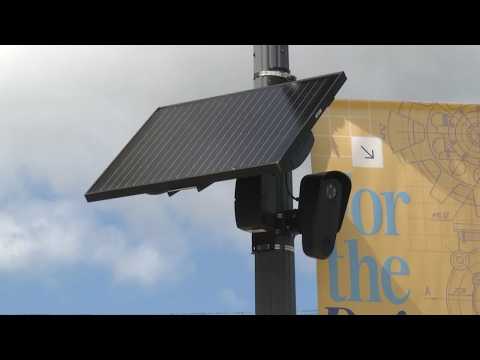 0:36
0:36State senator calls for more oversight as Flock abuses increase
Atlanta News First reports Georgia state Sen. John Albers said he was working with sheriffs, police chiefs, and Flock on stronger audits, shorter retention, and privacy safeguards. The report does not establish introduced legislation or an adopted policy.
Atlanta News First / 0:36OPEN ORIGINAL VIDEO 0:50
0:50‘Darth Vader’ speaks out in support of Flock cameras at government meeting
Atlanta News First shows satirical public comment by a person dressed as Darth Vader at San Diego's August 19 Public Safety Committee meeting. RouteFrame matched the remarks to the official city meeting captions. The clip is public comment, not a council vote or evidence of camera status.
Atlanta News First / 0:50OPEN ORIGINAL VIDEOSix ideas that prevent bad conclusions.
Open one question at a time. The first answer is expanded to get you started.
01 / What an ALPR recordsPlate, time, place, and images, depending on system and policy.
Automatic license plate reader systems are designed to capture plate identifiers and often record time, location, and vehicle images. Exact fields, retention, access, and sharing depend on the system and policy.
02 / How a public purchase happensApproval is a step in a long chain, not proof of installation.
A proposal can move through staff review, budget authority, public agendas, council or board approval, contracting, installation, renewal, amendment, and expiration. Approval is not proof of installation.
03 / Why costs differBundled contracts make a single camera price meaningless.
Contracts can bundle cameras, cellular service, software, installation, storage, support, search tools, and retention. RouteFrame never treats a bundled effective rate as a universal camera price.
04 / How grants fund deploymentsA grant changes who pays first, not what it costs later.
Federal, state, or regional grants can pay initial or expansion costs. A grant shifts the funding source, but it does not eliminate long-term maintenance or renewal questions.
05 / How data sharing can workScope depends on policy, agreements, and state law.
Policies may permit searches or sharing across agencies. Scope varies by jurisdiction, agreement, user permissions, audit rules, and state law. A map point alone cannot establish those rules.
06 / Why camera counts are uncertainApproved, installed, and active are different numbers.
Public documents can describe approved, installed, active, inactive, replaced, relocated, or proposed equipment at different dates. RouteFrame separates those states instead of adding them together.
Know what a camera marker means.
RouteFrame retains available public source fields and retrieval dates. It does not turn a mapped point into proof that a system is active, owned by a named agency, or tied to a specific contract.
A source ID and mapped location, plus direction, operator, vendor, dataset version, or retrieval fields only when the public record provides them.
Current operation, exact hardware, capture range, retention, sharing, installation date, ownership, policy, and cost without reviewed evidence.
Absence from a later snapshot means the record was not present in that snapshot. It does not prove removal or inactive status.
RouteFrame can use the latest rolling snapshot for resilient loading and labels archived source data instead of calling it live.
Check the label before the number.
Confirmed
A high-quality primary source directly supports the narrow claim displayed.
Estimated
A disclosed model uses named assumptions and source benchmarks. It is not an invoice or exact expenditure.
Unknown
The current research set does not support the field. RouteFrame leaves it empty instead of guessing.
Conflicting
Sources disagree or describe different dates and scopes. Both remain visible until reconciled.
Follow a system from proposal to review.
An agency identifies a use case and scope.
Staff reports, pilot proposals, and vendor quotes usually appear here first.
EVIDENCE LIMIT A proposal proves interest, not purchase, installation, or operation.
A budget, grant, or governing vote may authorize spending.
Agendas, resolutions, and grant awards are the documents to look for.
EVIDENCE LIMIT Authorization is a ceiling, not a payment. Funds may never be drawn.
Terms define products, services, duration, and price.
Signed agreements and quotes carry the enforceable scope.
EVIDENCE LIMIT A signed contract does not prove installation happened.
Installation must be verified separately from approval.
Deployment evidence includes installation reports and verified device records.
EVIDENCE LIMIT Approved quantities and installed quantities are different numbers.
Retention, access, sharing, and audit rules govern use.
Usage policies, retention schedules, and sharing agreements live here.
EVIDENCE LIMIT A published policy is not proof of compliance. Audits are the evidence.
Renewals, amendments, audits, removals, and disputes change the record.
Expirations and renewal votes decide whether a system continues.
EVIDENCE LIMIT An expired term with no renewal record means current status is unknown.
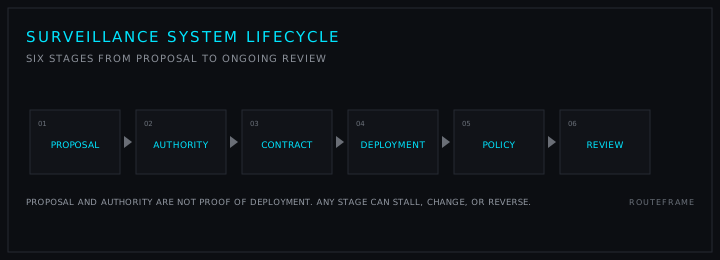
Read a procurement record in six passes.
- Find the decision.Identify what the governing body actually approved.
- Find the scope.Separate units, add-ons, services, and optional products.
- Find the dates.Distinguish proposal, approval, signature, installation target, and expiration.
- Find the money.Separate first-year, recurring, total ceiling, grant share, and installation.
- Find the policy.Look for retention, sharing, access, audit, and reporting rules.
- Record the gaps.Note current quantity, renewal, removal, and policy fields that remain unsupported.